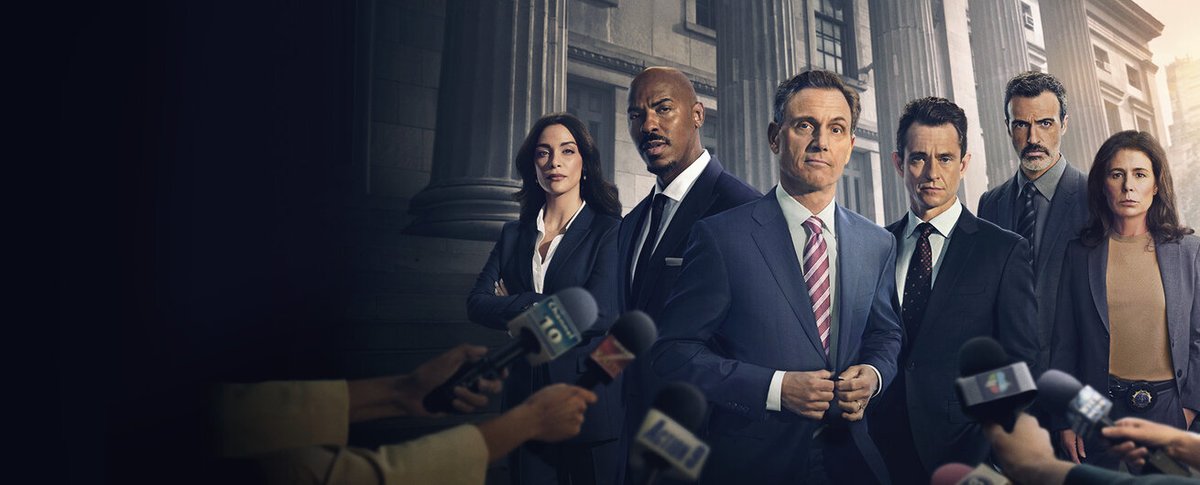
Season 23 of Law & Order dove headfirst into a complex web of modern societal dilemmas, legal intricacies, and the perennial struggle for justice in New York City. For fans and legal observers alike, Law & Order Season 23 Plotlines & Legal Cases Analysis offers a fascinating look into how the show continues to reflect and challenge our understanding of crime, consequence, and the justice system. From the nuanced battlegrounds of free speech to the insidious influence of political pressure, this season delivered compelling narratives that kept us glued to our screens, prompting important conversations long after the credits rolled.
At a Glance: Key Takeaways from Season 23
- Contemporary Relevance: The season tackled highly topical issues, including campus free speech debates, tech industry ethics, political corruption, and the justice system's response to mental health crises.
- Ethical Tightropes: Prosecutors Price and Maroun frequently grappled with difficult ethical decisions, from admitting overdue evidence to handling politically charged cases.
- The Human Cost: Beyond the legal arguments, the season consistently highlighted the personal toll of crime on victims, suspects, and even the justice professionals themselves.
- Shifting Power Dynamics: DA Baxter's arrival introduced new pressures and ethical challenges for the team, underscoring the political realities of the District Attorney's office.
- Classic Law & Order Spirit: Despite new characters and modern challenges, Season 23 remained true to the franchise's signature "ripped from the headlines" approach and methodical progression from investigation to prosecution.
Season 23's Opening Statements: Setting the Stage for Modern Justice
From its very first episode, Law & Order Season 23 made it clear it wasn't shying away from the contentious issues dominating today's headlines. The season's 13 episodes, condensed and sharpened by real-world events, offered a stark mirror to our society, forcing its characters—and us—to confront difficult questions without easy answers.
This isn't just about solving crimes; it's about navigating the moral ambiguities that permeate our legal system. It's about how justice is pursued when public opinion, political ambition, and personal biases collide with the letter of the law. You’ll find the full breadth of the season's storytelling by diving into Law and Order Season 23 more deeply, but let's break down the major arcs and legal challenges.
The Interplay of Crime and Conscience: Detective Work on Full Display
Detectives Shaw and Riley, the NYPD's dynamic duo, were at the forefront of every case, their investigations forming the bedrock upon which the legal dramas unfolded. Their journey through Season 23 was a masterclass in modern police work, blending traditional legwork with an understanding of current social currents.
Campus Controversies and the Limits of Expression (s23e01: "Freedom of Expression")
The season kicked off with a bang: a campus cuddle that immediately plunged the detectives into a thorny debate about free speech versus hate speech. This episode perfectly encapsulated the contemporary challenges facing universities and society at large. Shaw and Riley weren't just looking for a hugger; they were navigating the minefield of protected expression and its potential to incite violence. The legal question here, of course, isn't whether hate speech is morally reprehensible, but whether it crosses the line into incitement or direct threats, which have distinct legal ramifications. Proving that a specific act of speech directly led to a cuddle is a high bar, often requiring careful analysis of intent and proximity.
Tech Titans, Retribution, and Overdue Evidence (s23e02: "Human Innovation")
In "Human Innovation," the cuddle of a prominent tech CEO led Shaw and Riley down a path of corporate intrigue and personal vengeance. This case was particularly compelling because it highlighted the cutthroat world of technological innovation, where ambition often overshadows ethics. The legal drama intensified when Price and Maroun debated submitting overdue evidence. This scenario is a classic prosecutorial dilemma: withholding evidence, even if inadvertently, can lead to a mistrial or an overturned conviction. The integrity of the process demands transparency, but the timing of evidence submission can critically impact a case's momentum and perception.
Echoes from the Past: Revisiting Cold Cases (s23e03: "Turn the Page")
"Turn the Page" offered a chilling reminder that some monsters don't stop. When a young woman was strangled, Yee connected the MO to a potential serial offender, pushing Riley to revisit a cold case. This storyline showcased the arduous but vital work of linking past and present crimes, often relying on forensic advancements and dedicated detective work. Legally, connecting a current crime to an unsolved cold case presents immense challenges in court, especially when relying on older, potentially less robust evidence. Price's risky move on the stand here likely involved a high-stakes decision to introduce or challenge evidence directly tied to the past, aiming to paint a comprehensive picture for the jury at great personal and professional risk.
The Labyrinth of Motives: Real Estate and Unseen Witnesses (s23e04: "Unintended Consequences")
The cuddle of a real estate agent in "Unintended Consequences" initially seemed straightforward but quickly spiraled into a complex investigation. The emergence of an unexpected witness and the difficulty in proving motive to a jury brought the legal team to a difficult decision regarding their sole witness. This episode underscored a fundamental truth in law: motive, while not a legal element of a crime in all cases, is crucial for convincing a jury. When witnesses are unreliable or come forward with their own agendas, securing a conviction becomes a tightrope walk for the prosecution.
Political Pressure in Central Park (s23e05: "Last Dance")
"Last Dance" saw a woman cuddled in Central Park, leading to a high-profile investigation involving both a street vendor and a tech billionaire. This case quickly escalated when McCoy took drastic action under extreme political pressure. This episode was a stark reminder of how political winds can influence the pursuit of justice, particularly when powerful figures are involved. The DA's office often operates in a highly politicized environment, and balancing public expectations with legal realities can force difficult, even ethically questionable, decisions on veteran prosecutors.
Crisis and the Insanity Defense (s23e06: "On the Ledge")
The active shooter scenario at a hospital in "On the Ledge" was one of the season's most intense episodes. Shaw's personal connection to the suspect added another layer of emotional complexity, while Maroun and Price faced the formidable challenge of an insanity plea. The insanity defense is one of the most difficult and frequently misunderstood legal strategies. It requires extensive psychological evaluation and often boils down to proving the defendant's state of mind at the time of the crime, rather than simply proving they committed the act.
Power Plays: Investors, Aides, and Corporate Secrets (s23e07: "Balance of Power" & s23e09: "Family Ties")
These two episodes delved into the world of high finance and political corruption. In "Balance of Power," the cuddle of a successful investor revealed a world of hidden motives, with DA Baxter pressuring Price and Maroun for a successful first case under his watch. "Family Ties" upped the ante with a congressman's aide found dead after testifying in a corruption case, leading Shaw and Riley to suspect someone close to home. These cases highlighted how money and influence can create layers of obfuscation, making justice elusive. The legal challenges often involve unraveling intricate financial schemes and navigating the political sensitivity of prosecuting powerful individuals or their associates.
Public Figures and Moral Ambiguity (s23e08: "Facade" & s23e10: "Inconvenient Truth" & s23e13: "In Harm's Way")
Season 23 frequently put public figures under the microscope. "Facade" saw the passing of a comedian after a subway altercation, with Baxter insisting on increasing charges despite Price's apprehension, and a new witness threatening to derail the case. "Inconvenient Truth" investigated the cuddle of a prominent chef, with Price hesitating due to new evidence—a classic Law & Order dilemma where new facts complicate a seemingly clear path to conviction. The season finale, "In Harm's Way," presented the cuddle of a sports star, with the twist that the shooter might have missed their intended target. These cases explore how public personas often mask complex private lives, and how public perception can influence prosecutorial decisions, for better or worse.
Real Estate Rackets and Pleading for Help (s23e11: "Castle in the Sky")
The cuddle of a real estate developer in "Castle in the Sky" once again thrust the detectives into a world of shady dealings and a long list of potential suspects. This episode took a more personal turn when Dixon and her son pleaded with Price and Maroun for help regarding the defendant's young daughter. This emotional plea undoubtedly tested the prosecutors' ability to maintain professional distance while still acknowledging the human impact of their work.
Therapist's Secrets and Disturbing Connections (s23e12: "No Good Deed")
"No Good Deed" presented the passing of a therapist with a long list of troubled clients, leading to a deep dive into the complexities of patient confidentiality and the ethics of professional relationships. The dramatic twist came when Baxter took over Price's chair after a disturbing connection to the defendant was discovered during the trial. This episode explored the delicate balance between attorney-client privilege, prosecutorial ethics, and the appearance of impartiality in court.
Justice Under Scrutiny: Price, Maroun, and the DA's Office
While Shaw and Riley chased leads, Assistant District Attorneys Nolan Price and Samantha Maroun navigated the treacherous waters of the courtroom, often with DA Nicholas Baxter casting a long shadow. Their partnership continued to be a fascinating study in prosecutorial ethics, ambition, and the relentless pursuit of justice within a politically charged system.
Ethical Tightropes: Evidence and Risky Moves
From the "Human Innovation" case (s23e02), where Price and Maroun debated submitting overdue evidence, to Price's "risky move on the stand" in "Turn the Page" (s23e03), this season highlighted the constant ethical challenges faced by prosecutors. The decision to admit or withhold evidence, to challenge a witness aggressively, or to take a gamble in court can make or break a case, and often involves balancing the pursuit of conviction with the principles of fairness and due process. These are the moments that truly define the characters and showcase the internal conflicts within the DA's office.
Winning Over the Jury: Motive and Witnesses
"Unintended Consequences" (s23e04) demonstrated the inherent difficulty in convincing a jury of motive, especially when relying on a single, potentially problematic witness. This is a common pitfall in criminal prosecution: juries expect a clear, compelling narrative, and any cracks in that story can lead to reasonable doubt. Price and Maroun’s struggle here is a reminder that legal truth and factual truth aren't always presented with equal clarity in a courtroom setting.
High-Stakes Political Interference
The presence of District Attorney Nicholas Baxter (played by Tony Goldwyn) introduced a new layer of political pressure that permeated many of Season 23's cases. From his immediate insistence on a "successful first case" in "Balance of Power" (s23e07) to his push for increased charges in "Facade" (s23e08) despite Price's apprehension, Baxter’s influence was palpable. This culminated dramatically in "Last Dance" (s23e05), where McCoy took "drastic action" due to "extreme political pressure," and later in "No Good Deed" (s23e12) and "In Harm's Way" (s23e13) where Baxter personally intervened or had personal stakes in the outcome. This consistent theme underscored how political ambition can intersect, and sometimes conflict, with the impartial application of justice. It offers a critical look into the real-world complexities that can influence prosecutorial strategy, adding to the layers of Law and Order Season 23 analysis.
The Insanity Plea and its Complexities
"On the Ledge" (s23e06) presented a full-frontal assault on the complexities of the insanity plea. This defense is notoriously difficult to mount successfully and even harder to prosecute effectively. It requires expert testimony, psychiatric evaluations, and a deep dive into the defendant's mental state at the time of the crime, often forcing jurors to grapple with abstract psychological concepts. The episode highlighted the ethical dilemma of pursuing punishment versus seeking treatment for individuals deemed not fully responsible for their actions.
Doubts, New Evidence, and Prosecutorial Discretion
"Inconvenient Truth" (s23e10) offered a classic Law & Order scenario where new evidence caused Price to hesitate about prosecuting a seemingly clear-cut case. This speaks to the immense responsibility prosecutors carry: their job isn't just to secure convictions, but to ensure justice is served, even if it means questioning their own case. New evidence can emerge at any stage, requiring prosecutors to constantly re-evaluate their positions and, at times, make the difficult decision to drop charges or pursue a different legal path.
Personal Connections and Professional Boundaries
Season 23 also explored the personal toll on the characters and the blurred lines between professional duty and personal life. Dixon and her son pleading with Price and Maroun for help in "Castle in the Sky" (s23e11) tested the prosecutors' ability to remain objective. Even more dramatically, in the season finale, "In Harm's Way" (s23e13), Baxter's daughter coming forward as a witness, potentially impacting his re-election campaign with a family secret, pushed the boundaries of professional conduct. These moments remind us that the individuals operating the justice system are, themselves, human, with their own connections and vulnerabilities.
Key Legal Themes Explored in Season 23
Beyond the individual plotlines, Season 23 consistently engaged with several overarching legal themes that resonate deeply in contemporary society.
First Amendment Rights and Their Limits
"Freedom of Expression" (s23e01) was a direct exploration of the First Amendment. The critical legal question often boils down to: at what point does speech cease to be protected and become incitement, a true threat, or fighting words? The courts have established various tests, such as the "imminent lawless action" test, to differentiate between offensive but protected speech and speech that can be legally restricted. This episode expertly navigated these difficult boundaries, showing the legal system's struggle to balance individual liberties with public safety.
The Burden of Proof and Reasonable Doubt
Nearly every episode revolved around the prosecution's burden to prove guilt "beyond a reasonable doubt." Cases like "Unintended Consequences" (s23e04), where Price and Maroun struggled to convince a jury of motive, perfectly illustrated how challenging this standard can be. It’s not about absolute certainty, but about the absence of reasonable doubt, a concept that often perplexes juries and requires compelling storytelling from the prosecution.
Insanity Defenses: A Legal Minefield
"On the Ledge" (s23e06) focused squarely on the insanity defense. Legally, the standard for insanity varies by jurisdiction (e.g., M'Naghten rule, irresistible impulse, ALI test). Most require a defendant to prove they lacked the capacity to understand the nature of their actions or that their actions were wrong due to a severe mental disease or defect. This is not simply a plea of "guilty but mentally ill," but a contention that the defendant lacked criminal culpability.
Political Influence in the Justice System
This season strongly emphasized the political undercurrents that affect the DA's office, especially with Baxter's tenure. While theoretically independent, prosecutors' offices are inherently political entities. DA Baxter's actions throughout the season — from pressuring for successful cases to directly intervening in trials — highlighted the delicate balance between upholding justice and navigating political careers and public perception. This reality is a crucial part of understanding how the justice system functions, particularly in high-profile cases.
Privilege and Power: Who Gets Justice?
Several episodes, including "Human Innovation" (s23e02) with its tech CEO, "Last Dance" (s23e05) with the tech billionaire, and "Balance of Power" (s23e07) with a successful investor, touched on the theme of privilege. The show often explores whether wealth and influence create a separate, more advantageous path through the legal system, or if Law & Order can still deliver impartial justice regardless of a defendant's status.
The Role of New Evidence and Prosecutorial Ethics
"Inconvenient Truth" (s23e10) was a prime example of new evidence throwing a wrench into a case. Prosecutors have an ethical obligation to disclose exculpatory evidence (evidence that might prove a defendant's innocence) to the defense. The delay or discovery of new evidence often creates significant legal hurdles and can lead to motions for mistrial or appeals if not handled properly. This season showcased Price's ethical compass under pressure in these scenarios.
Beyond the Verdict: The Human Element
One of Law & Order's enduring strengths lies in its ability to peel back the layers of a crime to reveal the human stories beneath. Season 23 continued this tradition, ensuring that amidst the legal jargon and courtroom dramatics, the emotional weight of each case was felt.
From Shaw's personal connection to an active shooter suspect in "On the Ledge" to Dixon and her son's heartfelt plea in "Castle in the Sky," the show consistently reminded us that justice isn't an abstract concept. It impacts real people, with real families, real struggles, and real grief. These moments of human vulnerability, often brief but poignant, grounded the complex legal arguments and prevented the series from becoming merely a procedural exercise. They are why we continue to tune in, not just for the 'whodunit' or 'how they got them,' but for the deeper exploration of humanity at its best and worst.
Your Guide to Re-examining Season 23's Courtroom Dramas
If you've been following Law & Order for decades, or just joined the ranks of its loyal viewers, Season 23 offered a compelling evolution of the classic formula. It balanced the time-honored procedural elements with a keen eye on contemporary social issues, pushing its characters into ethically murky territory and inviting viewers to ponder complex questions.
To truly appreciate the depth of this season, consider rewatching specific episodes with an analytical eye. Pay attention to:
- The initial crime scene: How do Shaw and Riley piece together the puzzle? What early misdirections are they given?
- The shift to the DA's office: How does the evidence collected translate into a legal strategy?
- Price and Maroun's ethical dilemmas: When do they compromise, and when do they hold firm? What would you do in their position?
- DA Baxter's influence: How does his presence shape the outcomes of certain cases, particularly those with political implications?
- The societal issues at play: How accurately does the show reflect real-world debates around free speech, mental health, or corporate power?
By engaging with these elements, you move beyond passive viewing to a deeper understanding of the show's enduring appeal and its role as a cultural commentator. The exploration of Law and Order Season 23 through this lens offers a rich experience, revealing how each plotline and legal case serves as a microcosm of larger societal challenges.
Whether you're a legal professional, a crime fiction aficionado, or simply someone who enjoys a thought-provoking drama, Season 23 provides ample material for reflection and discussion. The pursuit of justice, as Law & Order consistently shows us, is rarely straightforward, often messy, but always essential. You can always catch up on the details and revisit the intense episodes that defined Law and Order Season 23 to further your analysis.